Found property UK: what to do when you find lost keys
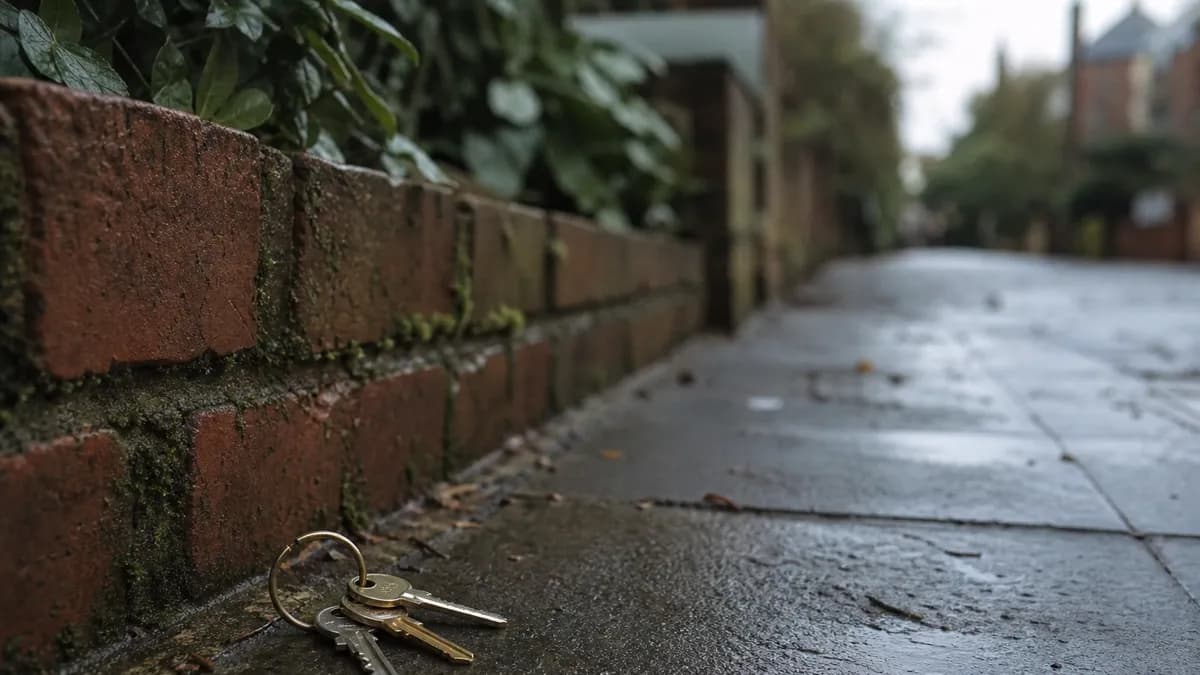
Found property UK guidance is oddly hard to pin down, which is why most people who pick up a set of keys off a pavement end up carrying them around for a fortnight. The rules are not complicated once somebody sets them out. This is the order to work through, what the police will and will not take from you now, and the point at which hanging on to something stops being helpful and starts being an offence.
What should you do first when you find someone's keys?
Give them to whoever is responsible for the place you found them in, before you try anything else. If the keys were on the floor of a supermarket, they go to the customer service desk. On a bus, to the driver. In a pub, to the bar. On a train or at a station, to the staff there. In a park or on a residential street, the nearest shop or cafe is a sensible first stop, because that is where somebody retracing their steps will ask.
This works because it puts the item back on the route the owner walked. Somebody who lost their keys in a shop returns to that shop. They do not, and cannot, guess which stranger has them.
Three practical points before you hand anything over:
- Note where and roughly when you found it. Lost property staff match descriptions against locations, and "outside the library, about half past four" narrows a search enormously.
- Ask what happens next and whether they log it. Larger organisations issue a reference; a corner shop will not.
- Leave a way to be contacted if you want the item back should nobody claim it, and accept that most places will not offer this.
If there is genuinely nowhere obvious, a local social media group is far more effective than it sounds. A photograph of an unusual keyring, with the location but never the full set of keys in frame, reaches the right street within hours.
Will the police take found property in England and Wales?
Usually not, unless the item carries personal data or has real value. Forces across England and Wales withdrew from general lost and found property years ago on cost grounds, and the position is set out on Ask the Police, the national public enquiry service run for policing. What most forces will still accept covers mobile phones, tablets, laptops and anything else holding somebody's data, identity documents such as a passport or driving licence, cash and high-value items, and anything potentially dangerous.
A plain set of house keys with no address on them falls outside that list almost everywhere. Ring 101 or check your own force's website before you make the trip, because a wasted journey to a front counter that closed in 2019 is the common experience here.
Scotland and Northern Ireland run this differently. The Police Service of Northern Ireland still operates a found property process of its own, so the answer genuinely depends on where you are standing.
Is it theft to keep something you have found?
It can be, and the offence has a name people find surprising: theft by finding. The Theft Act 1968 turns on dishonesty, and keeping something is not dishonest if you genuinely believe the owner cannot be traced by taking reasonable steps. The whole question is therefore what counts as reasonable.
Picking up a £20 note blown along a street and pocketing it is one thing. Picking up a wallet with a name, a bank card and a gym membership in it and keeping the contents is another, because the owner is plainly traceable and you have chosen not to try. People are prosecuted for the second kind, occasionally for amounts that make the news.
The safe position is simple. Make one honest attempt to return the item, and keep some record that you did.
What should you do with a found wallet, bank card or phone?
Treat anything with personal details on it as belonging to the organisation that issued it rather than to you. A bank card carries return instructions on the reverse, and handing it in at a branch of that bank is quicker than anything else you can do with it. A driving licence or passport goes to a police station, because those are exactly the identity documents forces still accept.
A phone is the one item worth the trip. It holds messages, photographs, banking apps and, very often, somebody's whole working life, and it is on the accepted list for that reason. Do not attempt to unlock it. Many locked iPhones and Android handsets will display an owner's message on the lock screen, and a phone put into its maker's lost mode shows contact details without exposing anything else.
Cash found loose is the awkward case. Hand it in where you found it, and if the amount is significant enough that you would be uncomfortable explaining it later, hand it to the police.
What if the keys have a Bluetooth tracker on them?
Then the owner may already know roughly where their keys are, and your best move is to leave them somewhere stable and visible rather than carrying them across town. A tracker updates its position when another phone passes it, so keys sitting on a wall by the gate where they were dropped are far easier to reunite than keys travelling home in your coat pocket.
Tags set to lost mode by their owner can be tapped with a phone to bring up a contact number or email the owner has chosen to share. That is the fastest resolution available in this whole article: one tap, one phone call, no lost property office. If you see a small coin-shaped tag on a ring, try it before anything else.
You may also get an alert on your own phone telling you an unknown tracker is moving with you. That is the anti-stalking feature doing its job and it is not an accusation. Follow the prompt, which will usually offer to play a sound so you can find the tag you are already holding.
What should you never do with keys you have found?
Never post them through the door of the address on the fob. A labelled keyring is a security failure, and the correct response is to hand the set in rather than to complete the chain for whoever follows you. Do not try the keys in nearby doors, for reasons that should not need spelling out. Do not leave them balanced on a garden wall outside a house you have guessed at.
And do not keep them indefinitely with a vague intention of finding the owner. That intention is exactly what the dishonesty test examines, and a fortnight in a kitchen drawer looks a great deal worse than a receipt from a lost property desk. If you are the one who has lost something instead, our guide to reporting lost property covers the other side of this.
How Air Tracker helps
Every route above depends on a stranger choosing to act. A tag removes that dependency for your own things.
Air Tracker clips to a keyring and appears in the Find My app that an iPhone already has, so there is nothing to install and nothing to subscribe to. It needs iOS 14.5 or later and does not work with Android phones. Tap Play Sound and it rings between 80 and 100 decibels across roughly sixty metres, which settles most losses before they become anyone else's problem. Further away, Apple devices passing the tag quietly refresh its last position, with the data encrypted end to end so the map stays yours.
Set it to lost mode and a finder gets your chosen contact details on a tap, without ever learning your address. It is IP67 rated against rain and puddles, runs up to two years on a CR2032 you can swap yourself, and comes two to a box with free UK delivery. Take a look at the two pack.
Written by Item Finder Updated
More from the journal
 How to4 min read
Key finder iPhone setup: done in five minutes
A key finder iPhone setup takes about a minute in Find My. Here are the steps, the alerts worth switching on, and what to do when a tag refuses to pair.
 How to5 min read
Locked out of the house: what to do in the UK
Locked out of the house with no spare key? Work through these steps before you call anyone, then how to pick a locksmith who will not drill a lock that opens.
 How to5 min read
How to find lost keys in the house: a room method
How to find lost keys in the house without turning it upside down: the six places they hide, a room by room order, and when to stop looking and start ringing.