Lost wallet UK: what to cancel, and in what order
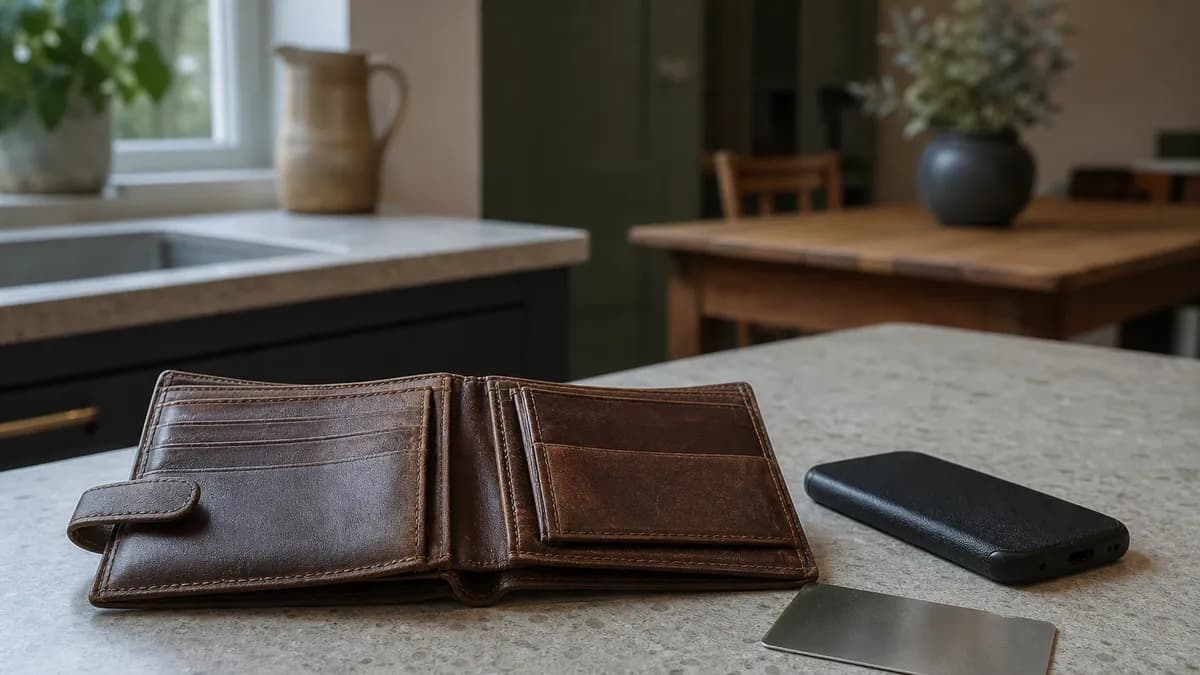
A lost wallet in the UK needs two things in the first ten minutes: freeze the cards, then stop. Freezing is instant, reversible and free in almost every banking app, and it buys you the hour you need to search properly before cancelling anything for good. Everything else on the list below can wait until you know the wallet is genuinely gone.
The order, top to bottom
- Freeze every debit and credit card in the app. Not cancel, freeze. If the wallet turns up on the passenger seat you unfreeze them and the afternoon is over.
- Search for ten minutes, properly. Car footwell and between the seats, the coat you wore, the bag's lining, the last shop counter, yesterday's trousers.
- Ring the last place you used it. Pubs, cafés and taxi firms hold wallets behind the bar far more often than they log them anywhere.
- Now cancel what cannot be frozen. Cards that have been used without you, store cards, travel passes.
- Driving licence. Replace through the DVLA online. The fee is £20 and the licence normally arrives within a week.
- Passport, if it was in there. The advice on GOV.UK is to cancel a missing UK passport straight away, because an uncancelled one is an identity-theft risk; the Home Office runs an online service for exactly that. A photo of the passport page helps with the verification questions.
- Travel and season tickets. Most UK operators can reissue a registered season ticket; an unregistered one is money gone.
- Anything with your address on it. If the wallet held a card or letter showing where you live, and also held keys, treat that as a security problem and change the door cylinder.
What not to bother with
Two calls waste time. The police will not take the report: as the Ask the Police service run by UK forces sets out, police in England and Wales have stepped back from routine lost and found work, and a wallet does not fall into the categories they still take in, unless it held significant cash, or you are reporting a theft and need a crime reference.
And there is no national lost-wallet desk. What exists instead is the venue, the transport operator and the private lost-property databases forces now signpost to, the full picture is in how to report a lost item in the UK.
Freeze versus cancel: the difference that matters
| Freeze | Cancel | |
|---|---|---|
| Speed | Seconds, in the app | Minutes, often a phone call |
| Reversible | Yes | No |
| Stops fraudulent use | Yes | Yes |
| Keeps direct debits running | Usually | No, they fail |
| New card needed | No | Yes, 3–5 working days |
The direct-debit row is the one that catches people. Cancelling a card kills recurring payments attached to it, so a wallet cancelled in a panic on a Friday produces a failed gym payment and a bounced subscription on Monday. Freeze first; cancel only when you are sure.
Why wallets go missing where they do
Wallets are lost in transit, not at home. According to Uber's tenth annual Lost & Found Index, published on 2 June 2026, the wallet was the second most commonly left-behind item across a decade of rides, behind only the phone, and the company reports that the peak window for leaving things behind is between 9pm and midnight.
That timing is the whole story. Losses cluster at the end of an evening, during a transition, when you are moving between places and paying attention to something else. It is why "where did I last have it" is such a hard question: you did not put the wallet down deliberately anywhere.
The practical response is unfashionable but effective, carry less in it. A wallet holding one card, a travel card and no identifying documents is a twenty-minute problem rather than a fortnight of admin.
How Air Tracker helps
A tracker cannot stop a wallet being left on a bar, but it can answer the question you are actually asking in the first ten minutes: is it gone, or is it in the house?
Air Tracker is a coin-shaped tag, 36.3 mm across and 9 mm thick, so the honest fit is a zipped coin pocket or behind the notes rather than a card slot; nothing that size goes into a slot built for a 0.76 mm card. We covered the sizing properly in what fits in a wallet and what does not.
Where it does fit, your iPhone can make it sound at 80–100 dB from up to roughly 60 metres, which is loud enough to hear through leather, a coat and a closed car door. Further away than that, the Find My app reports the spot the tag was last seen in and keeps that fresh via other Apple devices going by, so you know whether to ring the restaurant or start cancelling. Switch on Notify When Left Behind and your phone warns you as you leave the table.
The limits are plain: you need Apple kit on iOS 14.5 upwards, an Android phone cannot pair with it at all, and no Ultra Wideband arrow exists. Each tag is IP67 rated, about ten grams, with a user-replaceable coin cell rated for as long as two years.
Frequently asked
Should I cancel my cards straight away? Freeze them straight away and cancel only once you are confident the wallet is gone or has been used. Freezing gives you the same protection while the loss is still uncertain, and it avoids the direct-debit fallout above.
Does home insurance cover a lost wallet? Cash and cards are usually excluded from a standard policy unless you hold personal possessions cover, and a simple loss is treated differently from a theft. Keys are the expensive part of a wallet loss, and what insurers pay for those is set out in key cover explained.
What if my keys were in the wallet too? Treat it as a security matter rather than an inconvenience, particularly if anything in the wallet showed your address. Change the front door cylinder, and tell anyone else who lives there before they come home to an unfamiliar lock.
Two tags and two key rings arrive in one box for under £15, delivery included. one for the wallet, one for the keys.
Written by Item Finder Updated
More from the journal
 Lost and found5 min read
Glasses finder: realistic options for specs and hearing aids
A glasses finder small enough to sit on your frames does not really exist. Here is what a coin-sized tag can honestly do for specs, cases and hearing aids.
 Lost and found4 min read
Remote finder: stop hunting behind the sofa cushions
A remote finder ends the nightly search down the back of the sofa. What is worth tagging around the house, where to attach it, and what will not work.
 Lost and found5 min read
An item finder for family life: sharing tags in Find My
An item finder for family only earns its place when everyone can ring it. How sharing works on iOS 17, who to add, and what each person should tag.