Does home insurance cover lost keys in the UK?
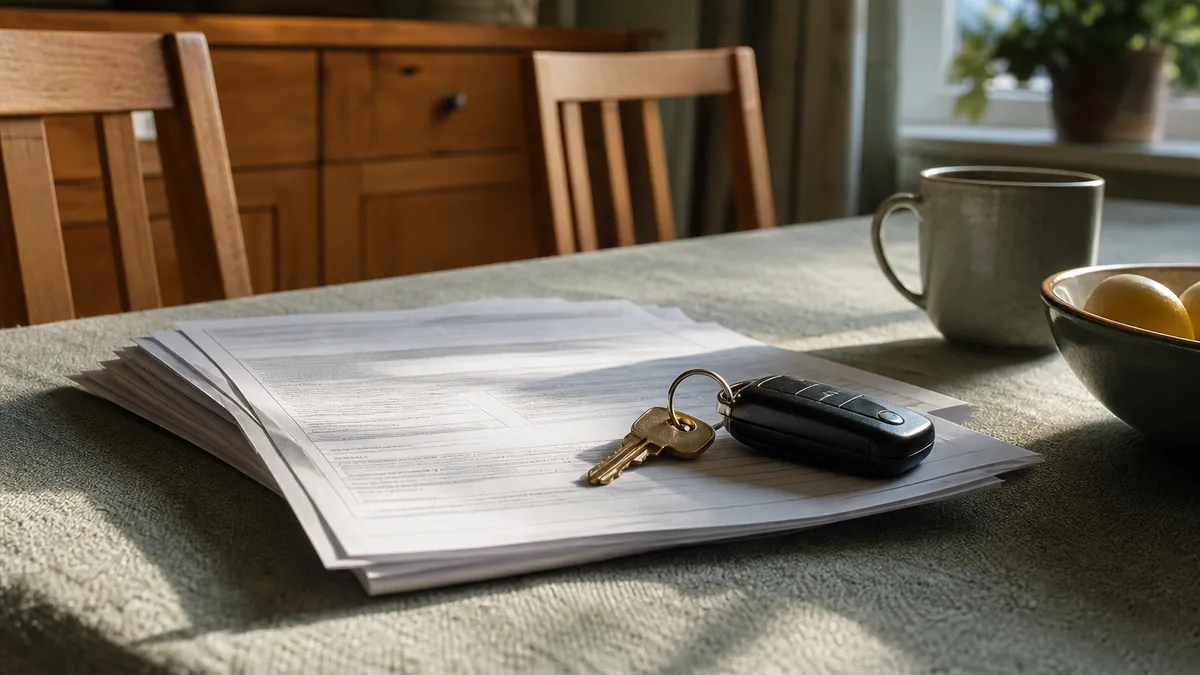
Does home insurance cover lost keys? For most UK policyholders the plain answer is no, not as standard, and not in the way people assume. Cover for keys and locks exists, but it is sold as a bolt-on with its own limits, its own waiting period and a set of exclusions that decide most claims before a locksmith is ever called. This is what the published policy wordings actually say, with the published figures as they stand.
What standard cover does and does not include
The distinction that matters is between stolen and lost.
Where keys are stolen, in a burglary, a mugging, a theft from a car, many home insurance policies will contribute to replacing locks, because the theft creates a documented security risk to the insured property. Where keys are simply mislaid, the loss falls outside the peril the policy is written against. Nothing was stolen, nothing was damaged, and there is no claimable event.
That gap is precisely what key cover is sold to fill, and it is worth noticing that insurers list it as an optional extra rather than folding it into the base policy. Homeprotect, for example, describes its key protection explicitly as "an optional add-on" to an existing policy rather than a standard feature.
What key cover actually pays for
The published wordings are more specific than the marketing. Homeprotect's key protection, as set out on its lost keys insurance page, covers "the cost of replacing lost or stolen keys, new locks if a security risk arises, locksmith callout charges", and extends to vehicle, home and office keys including immobilisers and alarms.
The sub-limits are where a policy either works or does not:
| Benefit | Published limit (Homeprotect) |
|---|---|
| Annual claims limit | Up to £1,500 |
| Keys locked inside | Up to £50 |
| Keys broken in the lock | Up to £50 |
| Vehicle hire | Up to £40 a day, maximum 3 days |
| Onward transport | Up to £100 a day, maximum 3 days |
Keycare, a long-standing standalone provider also sold through several banks and insurers, advertises comparable headline cover: up to £1,500 a year for lost or stolen keys plus replacement locks and locksmith charges, access into your home or car through approved locksmiths, vehicle hire at £50 per day for up to three days or a taxi home where the vehicle cannot be used, complete cover for every key attached to the fob, and no excess to pay. Keycare also runs a £10 reward scheme for whoever returns a tagged set.
The exclusions that decide claims
Four conditions appear across almost every wording, and each one refuses claims regularly.
- The 48-hour rule. Homeprotect excludes claims arising within the first 48 hours of the policy unless comparable cover was already in force immediately before. Buying key cover on the doorstep after losing the keys does not work.
- The 30-day deadline. Claims made more than 30 days after the incident are excluded. This catches people who pay for an emergency locksmith at midnight, put the receipt in a drawer and remember the policy six weeks later.
- Crime reference numbers. Where keys were stolen rather than lost, a police report and a crime reference number are required. Without one the claim fails regardless of what happened.
- Territory and duration limits. Cover is typically UK-only, and Homeprotect excludes keys lost or stolen for less than three days unless undue hardship is agreed, a clause aimed squarely at keys that turn up.
Is it worth buying?
That depends almost entirely on what a claim would cost you. Master Locksmiths Association price guidance for 2026 puts labour from around £85 an hour, rising to roughly £95 in London and between £122 and £153 an hour for emergency work after midnight, with unlocking a door from around £90 and a basic euro cylinder replacement from around £105.
Against those numbers, a household with a single front door lock and no car fob is insuring a modest exposure. A household with a keyless car, a multi-point uPVC door and a habit of losing things has a much larger one. The arithmetic is personal, and it is worth doing before the renewal rather than after the event, we broke the underlying repair and replacement bills down separately in the locksmith cost of lost keys.
How Air Tracker helps
No insurance product shortens the search. Every policy above pays out after a set of keys is accepted as gone, and the cheapest claim is the one that never opens.
That is the narrow job a tracker does. Air Tracker goes on the ring using the key ring included in the box, pairs with the Find My app already on an iPhone, and rings at 80–100 dB on demand from up to roughly 60 metres, which resolves the large majority of losses, the ones where the keys were in the house all along. Beyond Bluetooth range, passing Apple devices report its last position back to the map, so you find out quickly whether the keys are at the office or genuinely elsewhere.
Two features matter for the exclusions listed above. Left-behind alerts fire as you walk away from the keys, which prevents the incident rather than documenting it. And Lost Mode lets a finder tap the tag for your contact details without seeing your address, since Apple encrypts the location data end to end.
Be clear about the boundaries: this is an Apple accessory from iOS 14.5 upwards, nothing about it works on Android, and no Ultra Wideband arrow walks you in. It is rated IP67, tips the scales at about ten grams, and its coin cell lasts as much as two years before a swap.
Two tags in a box for less than £15 is a fraction of one hour of after-midnight locksmith labour. see what is in the box.
Sources
Written by Item Finder Updated
More from the journal
 Guide4 min read
The real time spent looking for lost items each day
UK research puts the time spent looking for lost items at eight and a half minutes a day. Here is what that adds up to, and how to get most of it back.
 Guide5 min read
What is an item finder and how does it work?
An item finder is a coin-sized Bluetooth tag for your keys and bags. Here is what one does, how it finds things, and the jobs it cannot do.
 Guide5 min read
Best key finder UK: what to look for before you buy
Choosing the best key finder UK shoppers can actually rely on comes down to six things, network, volume, battery, water rating, fit and cost per tag.