Lost keys: what to do first and how to stop it happening again
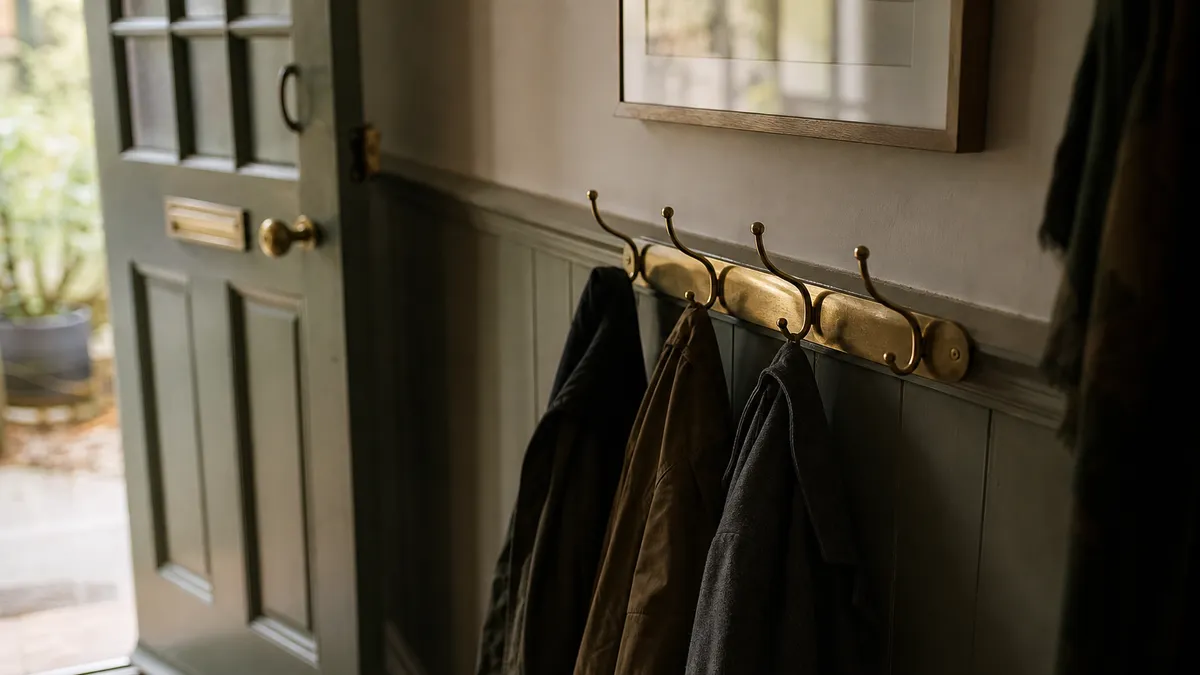
Lost keys have a very particular rhythm. Five minutes of mild irritation, ten minutes of patting the same four pockets, then a cold drop in the stomach when you realise this is real. What happens over the next hour decides whether this costs you an evening or several hundred pounds. Here is the order to work in, and then the boring prevention that means you never read this page again.
The first twenty minutes: search properly, not frantically
Panic searching is the same three places over and over. Do this instead.
- Stop moving and retrace out loud. Say the last confirmed sighting aloud: "I had them at the front door." Everything before that is irrelevant.
- Search the horizontal surfaces first. Keys land on things. Worktops, the arm of the sofa, the top of the fridge, the shelf by the kettle, the table you put the shopping on.
- Then search the containers you were carrying. Every pocket of the bag you had, including the one you never use. Coat pockets of the coat you wore, not the coat you always wear.
- Then the absurd places. The fridge. The bin. The washing machine. Inside a shoe. Under the cat. These are absurd because they are where keys actually turn up.
- Check the door itself. A surprising share of "lost" keys spent the night hanging in the outside of the lock.
Set a hard limit of twenty minutes. Beyond that you are not searching, you are re-searching, and it is time to change approach.
The next hour: contain the damage
If they have not surfaced, work through this quickly.
Ring the last place you were. Pubs, cafés, gyms and supermarkets all have a lost property box and they all fill up by closing time. Ring before they shut, not tomorrow.
Work out what is attached. This is the important question. A bare house key that nobody can connect to an address is an inconvenience. A key on a fob with your address, your car registration or a gym card with your name on it is a security problem. Be honest about which one you have.
Decide about the locks. You need a locksmith the same day if your keys carried anything identifying, if they were lost near your home, or if they were taken rather than mislaid. If you genuinely dropped them thirty miles away with nothing identifying attached, the risk is much lower and you can take a night to think about it. Bear in mind that most home insurance policies expect you to secure the property promptly, and some will not pay out on a claim where the burglar simply let themselves in.
Get the spare, but do not rely on it. Using the spare set is the moment most households quietly become a one-key household, and the next loss is the expensive one. Cut a replacement within the week.
Tell whoever else needs to know. Landlord, letting agent, building manager, whoever holds the block's key policy. Some leases require it.
What lost keys actually cost
The bill is rarely just the key. Emergency entry alone typically starts around £90 to £100 in the UK, before any parts, and evening or overnight labour rates run considerably higher than daytime ones. Replacing a euro cylinder starts around £105, and a full change of locks on a house with a couple of external doors runs into the hundreds. Vehicle keys are worse: a modern fob with a transponder and programming can run from £150 to well past £500 depending on the car.
We put the full breakdown, with sources, in what a locksmith costs against a key finder.
Stopping it happening again
Losing keys is not a character flaw, it is a systems failure. Three fixes, in order of how much they help.
Give the keys one home. Not "usually the worktop". One hook, one bowl, one shelf, inside arm's reach of the front door. The rule is that keys either live there or are in your hand. Households that do this stop losing keys almost entirely, because there is no ambiguity to exploit.
Make the keyring bigger and stranger. A slim, dark, silent bunch of keys is optimised for disappearing into sofas. Bulk and colour genuinely help.
Make them findable rather than memorable. This is the part willpower cannot do for you. A tracker on the ring means the search stops being a memory exercise and becomes a query: press a button, listen, walk towards the noise. When they are not in the house at all, the map tells you which building to ring.
The tricky cases
- Shared households. The keys everyone uses are the keys nobody is responsible for. Tag the communal set.
- Children. A tag on a school key means the panic at 3.45 pm is a two-minute event rather than a phone call to a parent at work.
- The spare. Tag it too. Spares are lost far more often than daily keys because nobody notices they have gone until the day they are needed.
How Air Tracker helps
Air Tracker turns "where are my keys" into a question with an answer. It clips onto the ring with the key ring supplied in the box, and from then on your iPhone can ring it at 80–100 dB from up to about 60 metres away, loud enough to locate a bunch that has slid down the back of a sofa or under a pile of post.
Walk out without them and your phone tells you before you are down the street, with the last known spot already pinned in the Find My app. If the keys are genuinely elsewhere, the Find My network of passing Apple devices keeps updating that pin, and Lost Mode lets a finder tap the tag to reach you without ever seeing your address. Location data is encrypted end to end, so the map is yours alone.
It runs for up to two years on a CR2032 you can swap yourself, it is IP67 so rain and puddles are irrelevant, and the phone side has to be Apple: iOS 14.5 upwards, with nothing available for Android.
Two trackers per box, free UK delivery and under £15 a box, which is less than an hour of a locksmith's time. start here.
Written by Item Finder Updated
More from the journal
 Lost and found5 min read
Glasses finder: realistic options for specs and hearing aids
A glasses finder small enough to sit on your frames does not really exist. Here is what a coin-sized tag can honestly do for specs, cases and hearing aids.
 Lost and found5 min read
Lost wallet UK: what to cancel, and in what order
Lost wallet in the UK? Freeze the cards in the banking app first, then the driving licence and any travel documents. Here is the full order and the deadlines.
 Lost and found4 min read
Remote finder: stop hunting behind the sofa cushions
A remote finder ends the nightly search down the back of the sofa. What is worth tagging around the house, where to attach it, and what will not work.