Lost keys in the dark: after the clocks go back
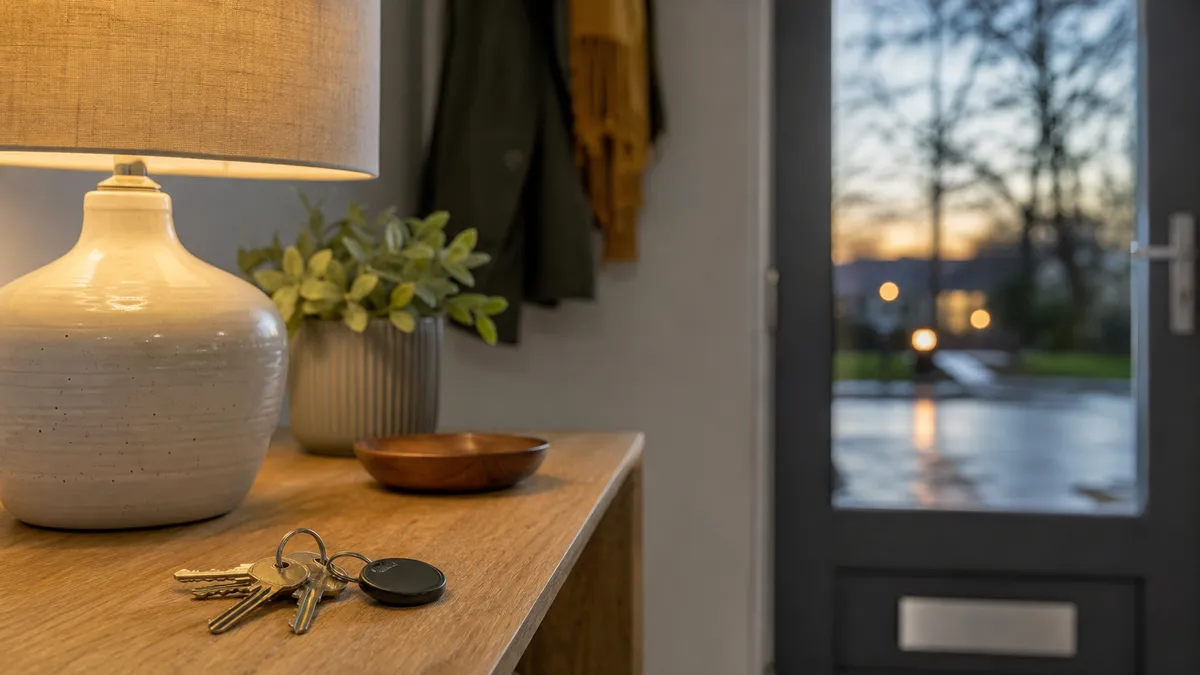
Lost keys in the dark are a problem that arrives every year in the last week of October, and this year it arrived on Sunday 25 October. The clocks went back, the commute home slipped into dusk, and the pocket you always drop them into is suddenly a pocket you cannot see into. This post sets out what actually changed, where keys tend to disappear on dark evenings, and a short routine that gets them back in your hand.
What did the clock change actually do?
According to Royal Museums Greenwich, British Summer Time ends on the last Sunday of October, when UK clocks move back one hour. In 2026 that was the early hours of 25 October. The sun did not move; the clock did. Evenings that were bright at six o'clock now go dark soon after the school run, and for anyone who works a normal day, the walk from the car to the front door is now made by street light.
That matters for keys because most of us find things by sight, not by memory. In summer you spot the glint on the garden path. In late October you do not, and the habit that used to work (glance round, spot, grab) fails quietly.
Where do keys vanish on dark evenings?
The same handful of places account for most of the trouble. The table below is a list of habits, not statistics: it is what a quick look at your own evening will confirm.
| Moment | What goes wrong | The fix |
|---|---|---|
| Unlocking in the dark | Keys go into a coat pocket you never check | One fixed pocket, same every night |
| Carrying shopping in | Keys put down on a work surface or the bag | Keys come off before the bags go on |
| Letting the dog out | Dropped on the lawn or the step | Ring them from your phone, do not sweep with a torch |
| Parking up | Left in the ignition or fallen between seats | Check before you shut the door |
| Locking up at the gate | Dropped on a wet path | Clip the ring to the bag strap |
Almost every row has the same shape: the keys were put somewhere for a few seconds, the light was poor, and nobody noticed them leave the hand. Anyone who has stood in a driveway pressing pockets will recognise it.
How do you search for keys in the dark?
Work outwards from the last door you used, in this order:
- Stand still and check every pocket you have on, including the ones you never use.
- Look at the floor immediately inside and outside the door with your phone torch held low, because a low beam throws a shadow that makes a metal ring easier to see than a high one.
- Check the surfaces you pass on the way in: the hall shelf, the kitchen counter, the top of the shoe rack.
- Retrace the car or the bag: keys slide into the gap beside a seat or the bottom of a rucksack.
- Only then widen the search to the garden or the street.
If you have been round that loop twice, stop. A third lap rarely finds what the first two missed; it only wears you out.
Can a tracker take the guesswork out?
Yes, for the kind of loss that happens at home or within a few streets. A tag on the ring will ring on command, which is a better answer than a torch when the problem is that you cannot see. The honest limits are worth knowing before you buy: it works with iPhones through Apple's Find My app, it does not point an arrow at the keys the way an AirTag with Ultra Wideband can, and it is not a live GPS device.
How Air Tracker helps
Air Tracker is a coin-shaped tag that works with Apple Find My on an iPhone. Clip one to your keys and the other to a bag or a wallet, and you can make it ring from the Find My app instead of searching blind. Pressed at the front door, the 80 to 100 dB speaker is audible down a dark hallway or from under a coat on the sofa. A left-behind alert on your phone can also warn you before you walk away from them.
It is sold as a box of two with free UK delivery, so there is a spare for the other set of keys in the house. See Air Tracker here.
Frequently asked
Do the clocks going back make people lose more things?
There is no official figure we can point to, so we would not claim one. What the change does is remove daylight from the part of the day when you handle keys, bags and coats, so small slips are less likely to be spotted at the time. Treat it as a reason to tighten the habit, not as a statistic.
How do I find my keys in the dark without a torch?
Use sound. If the keys carry a Find My compatible tag, open the Find My app on your iPhone and choose Play Sound, then follow the noise. Without a tag, ring a second set of keys or stand in the doorway and check the nearest surfaces by touch.
Does Air Tracker work with an Android phone?
No. Air Tracker needs an iPhone running iOS 14.5 or later, because it uses Apple's Find My network. Android owners should look for a tracker built for Google's Find Hub instead.
Where is the best place to keep keys at home?
Pick one spot at the door you use most, and make it a hook or bowl you can find by touch. Keep it the same every night, because a habit that survives a bad day is worth more than a clever location.
Sources
Written by Item Finder Updated
More from the journal
 Guide5 min read
Best key finder UK: what to look for before you buy
Choosing the best key finder UK shoppers can actually rely on comes down to six things, network, volume, battery, water rating, fit and cost per tag.
 Guide5 min read
Item finder for winter coats: gloves, hats and scarves
An item finder for winter coats can ring a jacket you left on a fence post. Here is what a Find My tag does for outerwear, and where it stops.
 Guide4 min read
Purse tracker for Christmas shopping: busy tills and bags
A purse tracker helps when a busy till, a heavy bag or a toddler makes you set things down in December. What fits, what works and what does not.